
Advanced Retinal Imaging in Ajax
Detect subtle eye disease earlier with Optomap ultra-widefield imaging and 3D OCT scanning technology.
Why Advanced Eye Imaging Is Important
Many eye diseases develop long before symptoms appear. Advanced retinal imaging allows our optometrists to examine structures deep inside the eye with exceptional detail and may help detect signs of:
- Glaucoma
- Macular degeneration
- Retinal tears or detachments
- Diabetic eye disease
- Retinal bleeding
- Optic nerve changes
- High myopia complications
These technologies also help establish a baseline for future comparison, allowing us to monitor subtle changes over time.
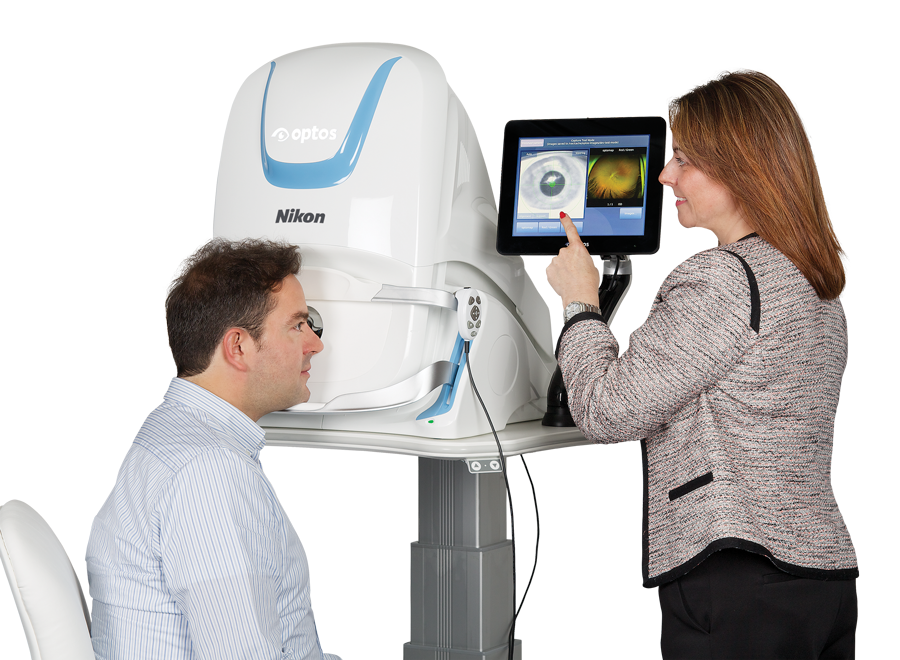
What Is Optomap Retinal Imaging?
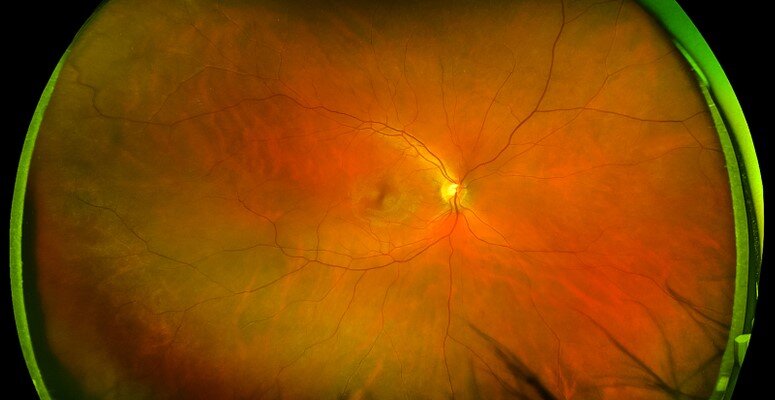
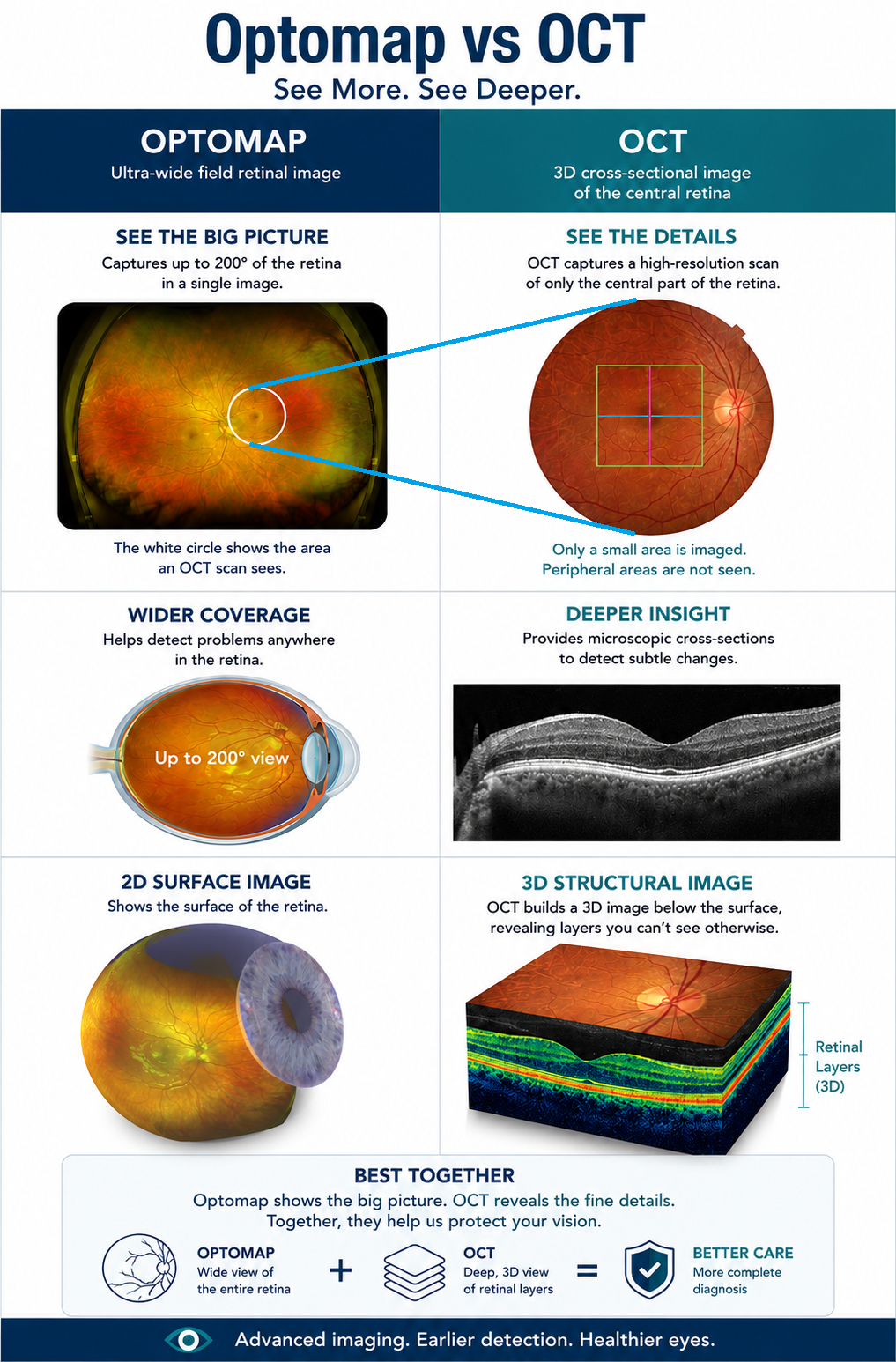
Optomap retinal imaging captures a detailed ultra-widefield digital image of the retina in seconds, allowing our optometrists to evaluate structures deep inside the eye and monitor subtle changes over time.
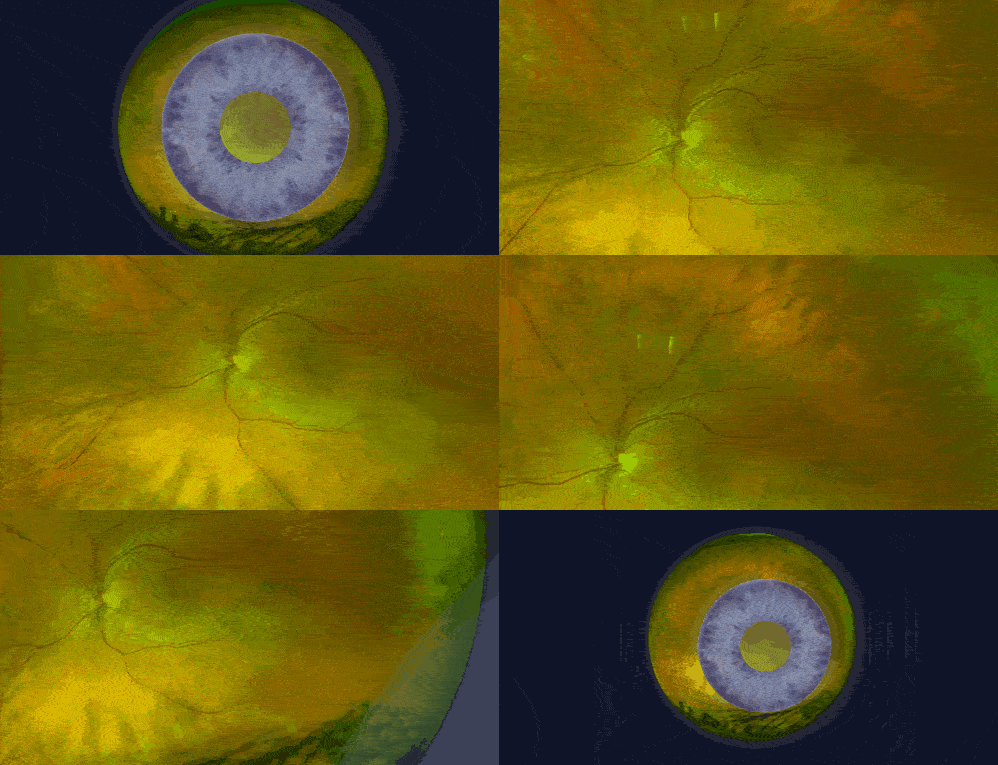
Benefits:
- Panoramic view of the back of the eye
- Quick and non-invasive
- Helps document retinal health
- Useful for monitoring changes over time
- Supports early detection of eye disease
Book Your Appointment Online
What Is 3D OCT Imaging?
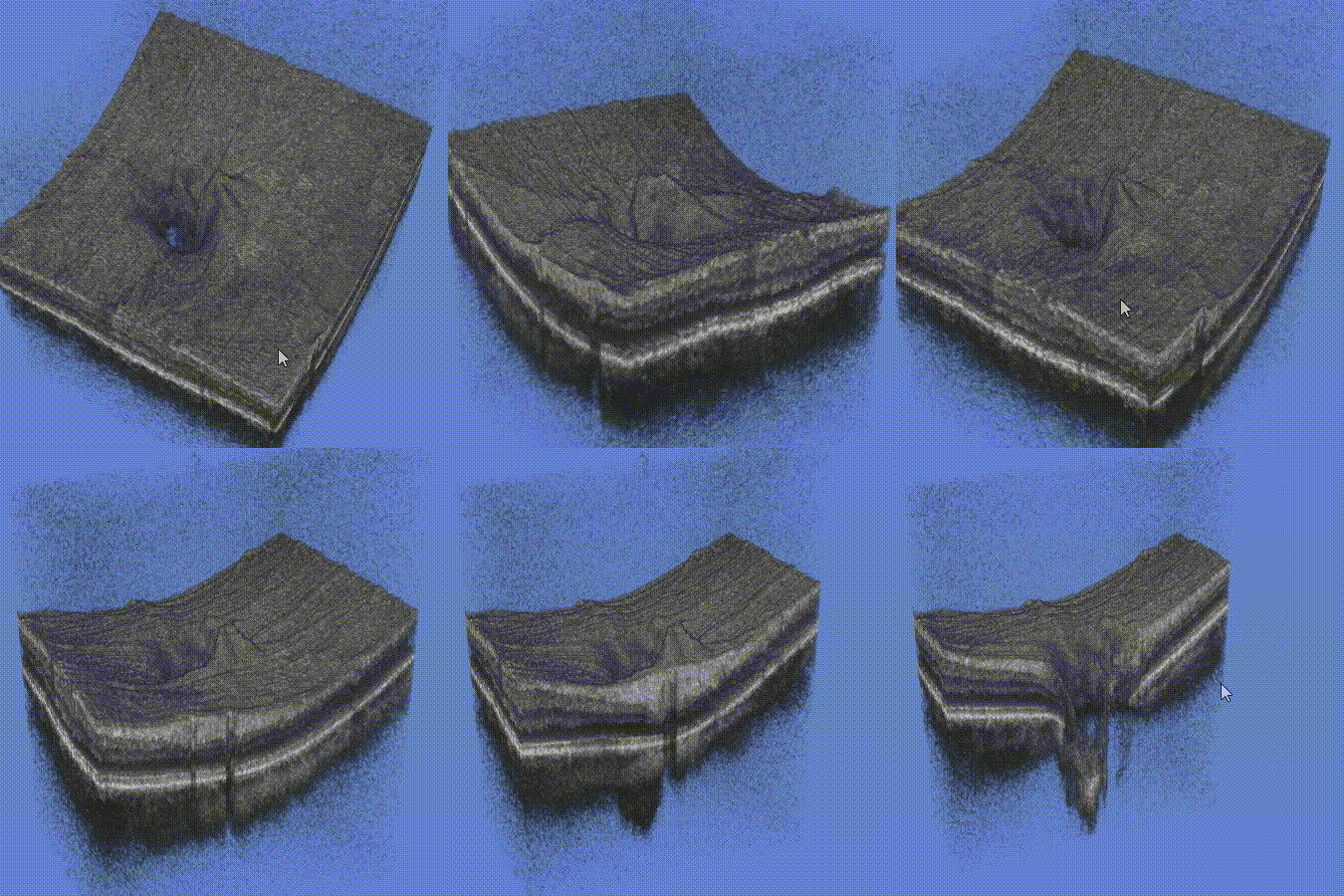
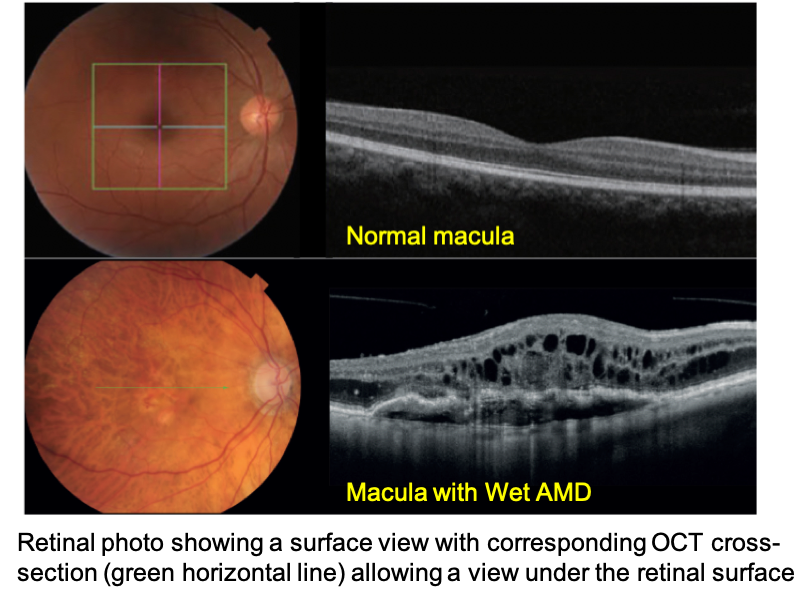
Optical Coherence Tomography (OCT) is a highly advanced imaging technology that creates detailed cross-sectional scans of the retina and optic nerve.
Often compared to an “ultrasound using light,” OCT allows our optometrists to view microscopic retinal layers that cannot be seen during a standard eye examination alone.
Why OCT Imaging Is Valuable
- Detects subtle retinal changes early
- Helps monitor glaucoma progression
- Evaluates macular health
- Tracks diabetic retinal changes
- Provides detailed optic nerve analysis
- Supports long-term monitoring
Call for Next Available Appointment
Frequently Asked Questions About Advanced Eye Imaging
Is Optomap better than dilation?
Optomap provides an exceptionally wide digital view of the retina, while dilation may still be recommended in certain situations. Our optometrists determine the most appropriate examination method based on your eye health needs.
Does OCT imaging hurt?
No. OCT imaging is completely non-contact and painless.
How long does imaging take?
Most scans are completed within minutes.
Can these tests detect eye disease early?
Advanced retinal imaging technologies can help identify subtle retinal and optic nerve changes that may not yet be causing symptoms.
Who should consider advanced retinal imaging?
Advanced retinal is particularly valuable for anyone over the age of 40, diabetics, anyone with high myopia, family history of eye disease, experiencing flashes or floaters, glaucoma suspects, taking certain medications, or anyone who values proactive health monitoring.